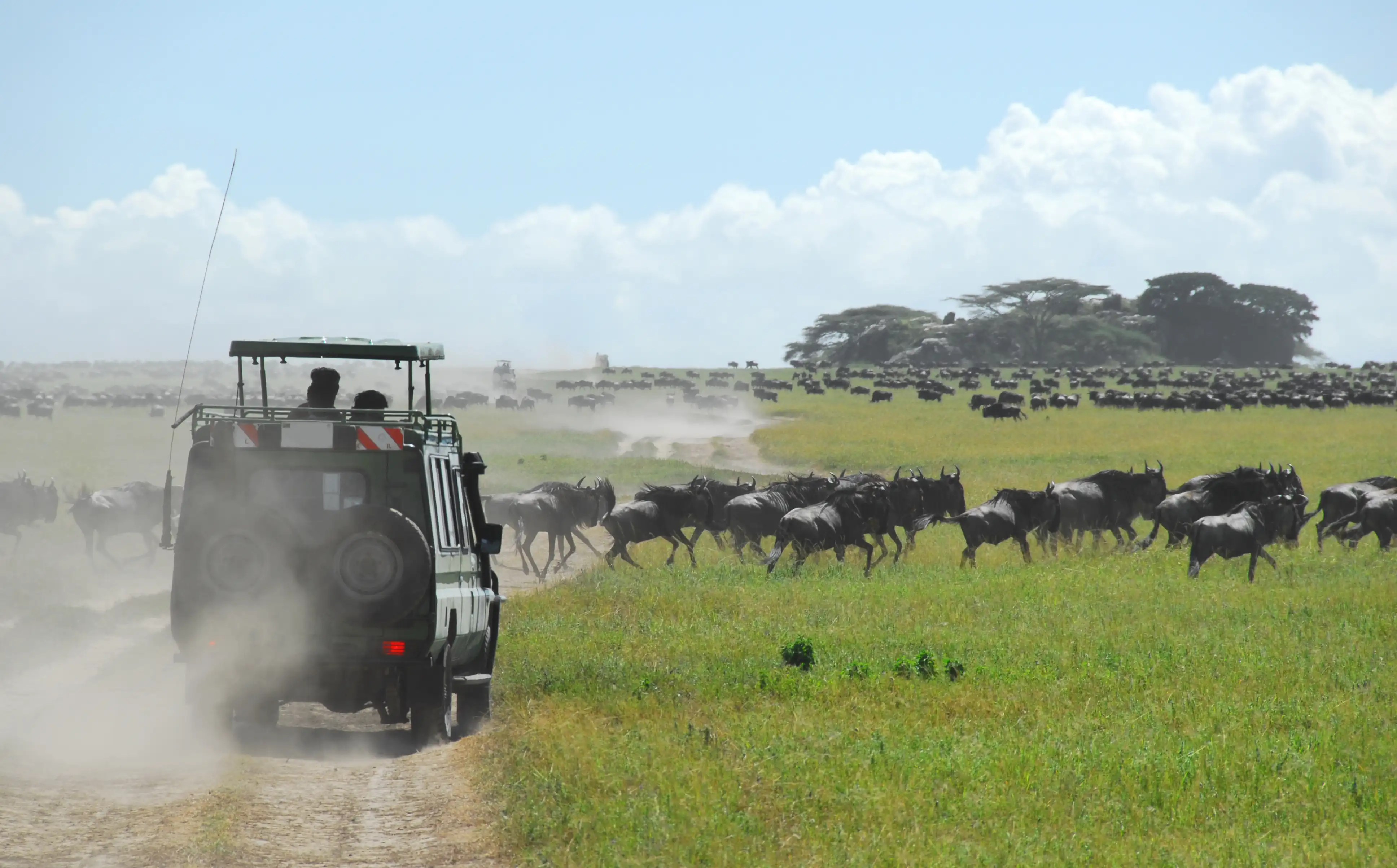

The Great Migration is not a single event — it's a continuous, year-round cycle of over 1.5 million wildebeest, alongside hundreds of thousands of zebra and gazelle, following the rains in a clockwise loop across the Serengeti-Mara ecosystem, a UNESCO World Heritage Site managed by the Tanzania National Parks Authority (TANAPA). There is no single 'best month' to see it; there is only the best month for what you specifically want to witness. This guide breaks the cycle down so you can time your safari to the moment that matters most to you.
January – February: Calving Season in the South
The herds gather on the short-grass plains around Ndutu and southern Serengeti, drawn by nutrient-rich grass after the short rains. This is calving season — over 8,000 wildebeest calves can be born here every single day at the peak, and the concentration of predators (lion, cheetah, hyena) following the herds makes this one of the most dramatic wildlife-viewing windows of the entire year.
March – May: The Long Rains and the Move North
As the southern plains dry out, the herds begin moving north and west through the Central and Western Serengeti in search of fresh grazing. This period coincides with Tanzania's long rains, meaning lush green scenery, fewer tourists, and significantly lower rates — a great option for budget-conscious travelers who don't mind the occasional afternoon shower.
June – July: The Grumeti River Crossings
By June, the migration reaches the Western Corridor and the Grumeti River, where the first dramatic river crossings of the year take place — smaller in scale than the famous Mara crossings, but with the added spectacle of the Grumeti's resident Nile crocodiles.
July – September: The Mara River Crossings
This is the iconic Great Migration footage you've seen in documentaries: the herds massing on the banks of the Mara River in the northern Serengeti before making a chaotic, adrenaline-charged dash across crocodile-infested waters. Crossings can happen at any time of day and are never guaranteed on a single game drive, so multi-day stays near the Mara River significantly increase your odds of witnessing one.
October – December: The Return South
As the short rains begin, the herds turn south again, moving back through the eastern and central Serengeti toward the Ndutu plains, ready to begin the cycle again with the next calving season.
So, When Should You Go?
- Want river crossings? Book July to September, and stay in the northern Serengeti or Maasai Mara for at least 3–4 nights.
- Want calving season and newborn predators in action? Book late January to February around Ndutu.
- Want lower prices, lush scenery, and fewer vehicles at sightings? Book April to May.
- Want a first safari with reliably excellent wildlife density year-round? June to October is Tanzania's dry season and delivers superb game viewing across the board, migration or not.
Want to time your safari to the migration?
Tell us what you most want to witness — river crossings, calving season, or predators in action — and we'll build your safari around exactly that.
Frequently Asked Questions
Sources & Further Reading
Alkebulan Experts
Safari Planning Team at Alkebulan Travels