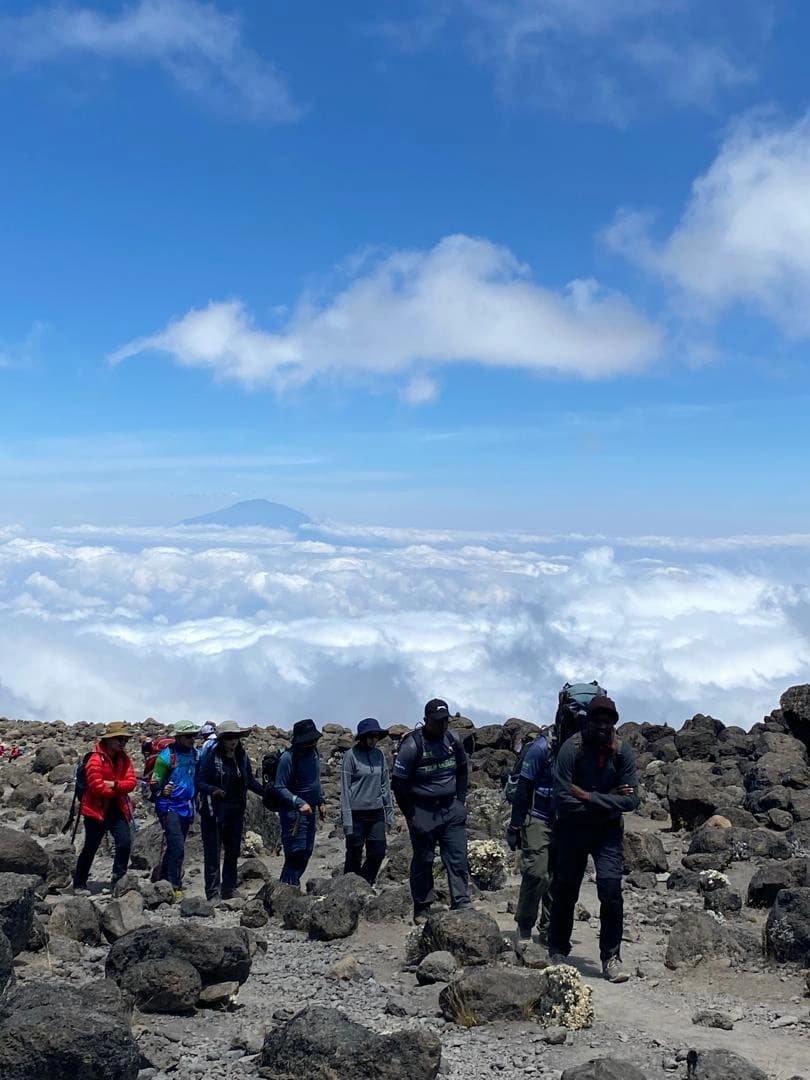

Kilimanjaro is unique among the world's great trekking peaks because a single day on the mountain can take you through four climate zones: humid rainforest, open moorland, alpine desert, and arctic summit. Packing correctly isn't about bringing everything you own — it's about layering intelligently so your body can adapt as the temperature swings from 25°C at Kilimanjaro Gate to well below -15°C at Uhuru Peak.
Below is the exact packing list our guides hand every client before departure, organized by category so you can check items off as you shop or pack.
1. The Layering System
Layering is the single most important packing principle on Kilimanjaro. Instead of one heavy coat, bring several thinner layers you can add or remove as the trail climbs and the temperature drops.
- Base layers: 2–3 moisture-wicking thermal tops and leggings (avoid cotton — it holds sweat and chills you)
- Mid layers: a fleece or softshell jacket for the moorland and alpine zones
- Insulating layer: a down or synthetic-fill puffer jacket for camp evenings and summit night
- Outer shell: a waterproof, windproof jacket and trousers (Kilimanjaro's weather can turn in minutes)
- Summit-night specific: thermal base layers plus your puffer and shell worn together — this is the coldest few hours of the entire trek
2. Footwear and Legs
- Broken-in, waterproof hiking boots with ankle support — never bring brand-new boots
- 3–4 pairs of hiking socks plus 1–2 thicker thermal socks for summit night
- Gaiters to keep scree and snow out of your boots on the summit push
- Hiking trousers (convertible zip-off styles work well for the lower, warmer days)
- Gloves: a thin liner pair for dexterity and a thick insulated outer pair for summit night
3. Head, Hands, and Extremities
You lose a significant amount of body heat through your head and hands, so this category matters more than most climbers expect.
- A warm beanie/hat plus a sun hat or cap for daytime UV protection
- A buff or balaclava to protect your face from wind on summit night
- UV-protective sunglasses (snow glare above the tree line is intense)
- Headlamp with spare batteries — the summit push begins at midnight, entirely in the dark
4. Sleep and Camp Comfort
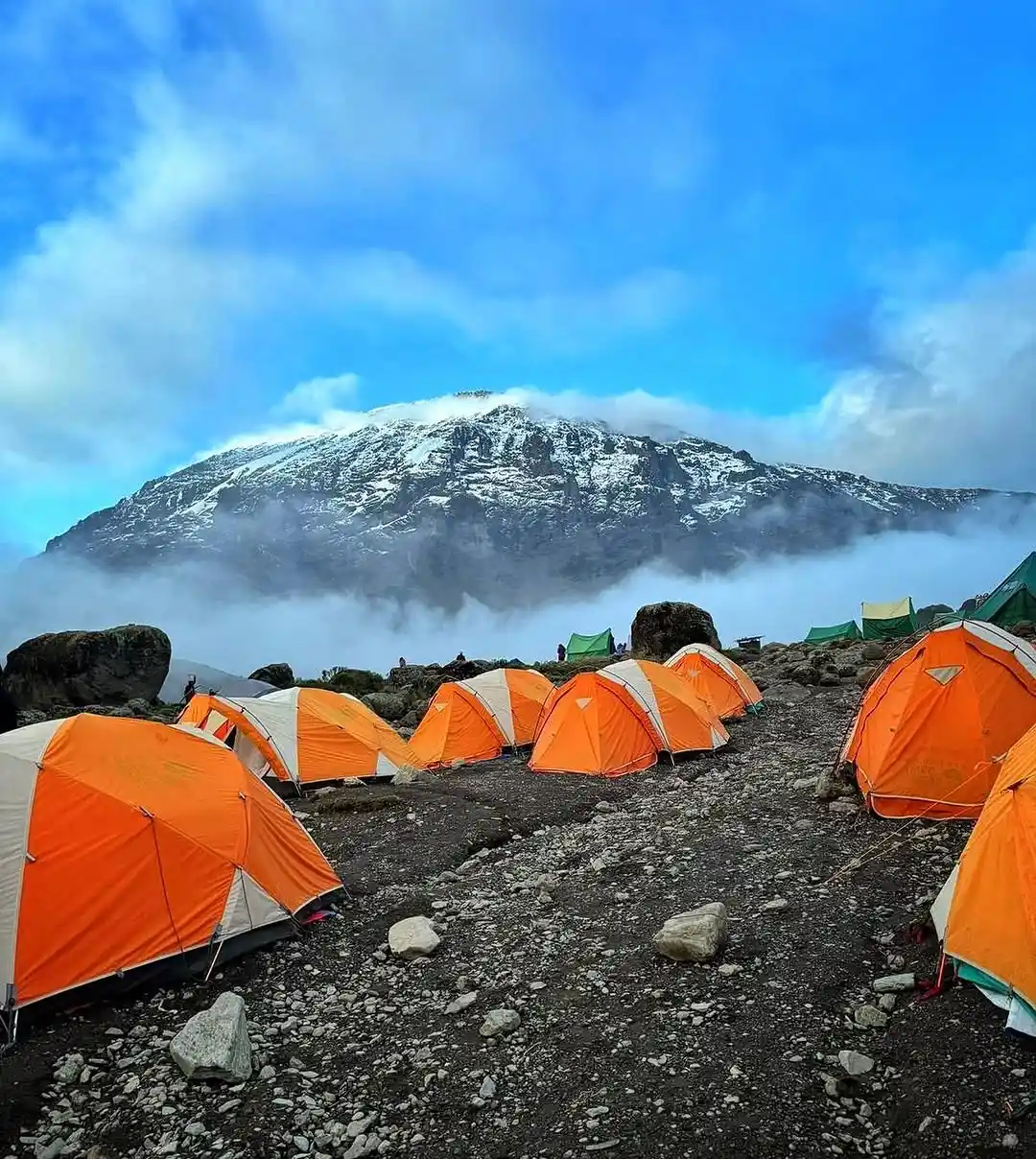
- A four-season sleeping bag rated to at least -15°C (we provide bags on request, but a personal bag is recommended for comfort)
- A sleeping bag liner for extra warmth and hygiene
- An inflatable sleeping pad or pillow for camp comfort
- Ear plugs — porter camps and mess tents can be noisy at popular campsites
5. Health and Personal Essentials
- A daypack (30–35L) with a rain cover for daily essentials
- 2–3 liters of water capacity (bottles or a hydration bladder — bladders can freeze on summit night, so bring a backup bottle)
- Personal first aid kit: blister plasters, painkillers, rehydration salts, and any prescribed altitude medication (consult your doctor about Diamox before you travel)
- High-factor sunscreen and lip balm with SPF
- Hand and toe warmers for summit night
- Wet wipes and a small quick-dry towel
What Alkebulan Travels Provides
To keep your bag lighter, our packages already include quality four-season sleeping tents, mess tents, dining equipment, and — on request — sleeping bags and trekking poles. Your climb briefing in Arusha includes a full gear check with your guide, who will help you adjust before you set foot on the trail.
Every climb we operate keeps porter loads within the limits set by the Kilimanjaro Porters Assistance Project (KPAP), and follows official Tanzania National Parks Authority (TANAPA) park regulations on the mountain.
As a rule of thumb: pack for warm days and freezing nights, prioritize layers over bulk, and trust your guide's gear check. Climbers who follow this system arrive at Uhuru Peak far more comfortable — and far more likely to summit.
Still deciding which route to pack for?
Tell us your fitness level and travel dates, and we'll match you to the right route — plus a gear checklist built specifically for it.
Frequently Asked Questions
Sources & Further Reading
Pendaeli Sirili
Senior Mountain Guide at Alkebulan Travels